
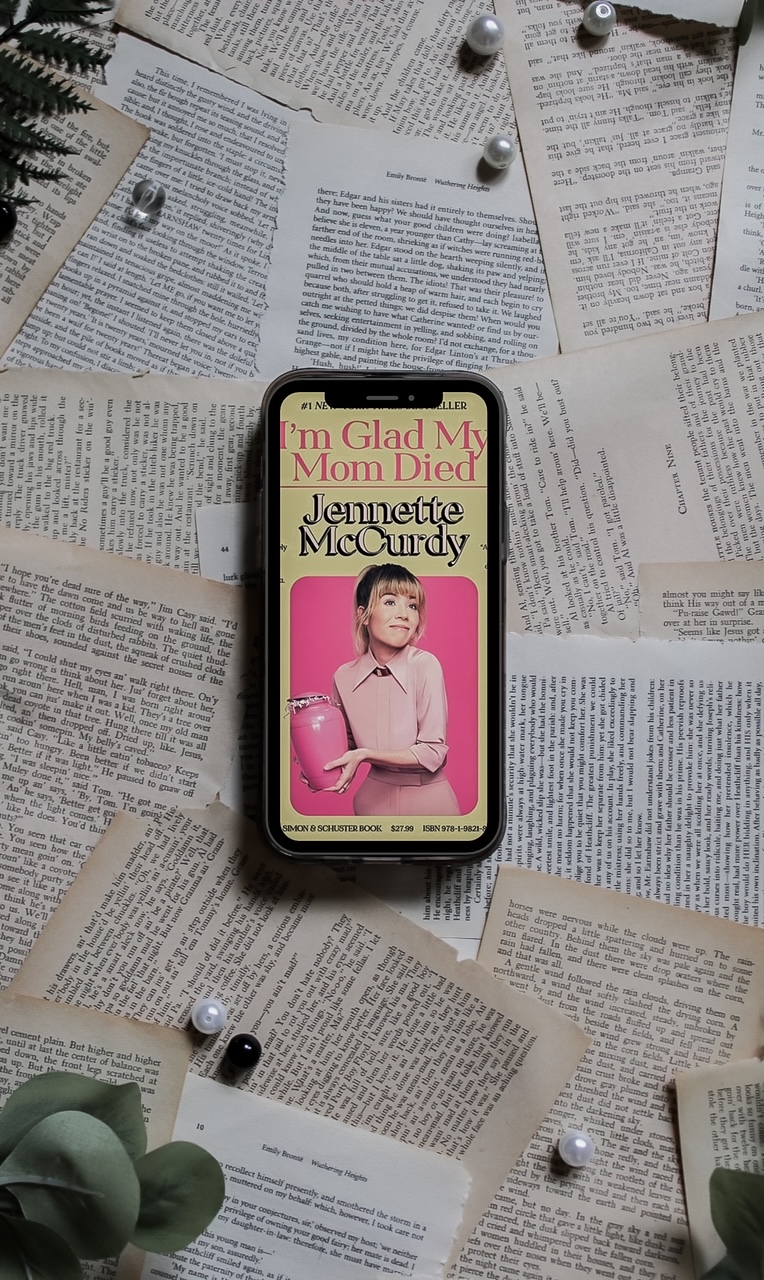
Title: I’m Glad My Mom Died
Author: Jennette McCurdy
Genre: Memoir, biography, autobiography
Publisher: Simon & Schuster
Publication Date: 2022
Format: Audiobook
Length: 6 hours
Read if you like: biographies, memoirs, coming-of-age stories, self-love discoveries, learning independence, dysfunctional family dynamics
Rating:
With a title like “I’m Glad My Mom Died” Jennette McCurdy’s memoir immediately caught my attention. I knew that it was the story of her childhood with a particular focus on her relationship with her mother and her experience as a child star, but I didn’t anticipate the depth of feeling, emotion, and trauma that McCurdy would unearth.
I’m Glad My Mom Died was a visceral retelling of core events throughout McCurdy’s life that shaped her into the person she is today. It’s an emotional and at times disturbing account of the devastating impacts a parent can have on your whole life’s trajectory and the predatory nature of Hollywood on children. McCurdy is a natural storyteller, with a gift for presenting her recollections in a factual, dry manner that leaves the long-term impacts to come from the events as self-evident. Listening to her read the book in her own words, with her own emotions, was a powerful experience and her story is one I expect to stick with me for a long time.
Fair warning: spoilers ahead for anyone who hasn’t read this book.
The Book: I’m Glad My Mom Died by Jennette McCurdy
I’m Glad My Mom Died is a memoir that follows Jennette McCurdy, a former Nickelodeon child star, from some of her earliest memories right through to the current day, with a particular emphasis on her relationship with her mother and the impacts that their dynamic had on her life and her career. McCurdy tells each story using the perspective she had at the time, often without retroactive commentary, allowing the reader to see what it is that she was experiencing in real time.
The narrative follows McCurdy through her early days of her mother attempting to get her into show business, through to her career with Nickelodeon and beyond, as well as through her mother’s first and final cancer diagnosis. Nothing is off-limits in McCurdy’s recounting: from her relationships with her family, her friends, and her lovers, to her experiences working in television and the exploitation she felt as a result of child stardom. In her stories, she provides a glimpse into every uncomfortable and traumatic event she experienced before the memoir culminates in a series of devastating personal situations and developments that lead her to exit the industry altogether.
The Review
This was an incredibly heavy book, and I felt it was made more so by McCurdy’s choice to tell her stories in first person, using only the perspective she had at the time of the events. As a self-aware adult, listening to her recount the nature of her relationship with her mother and all of the destructive and abusive patterns that her mother engaged in with her is heart-wrenching. You see the trauma and the impacts that trauma will have long before McCurdy acknowledges it herself, and your heart breaks for her and her experience from the very start.
McCurdy’s recounting of her childhood was also a stark look at the lives of child stars and the various ways that the nature of the industry can just absolutely wreck a person. From the obsessive focus on physical attributes and conventional beauty to the abusive and manipulative nature of the industry, she lays out how the industry is structurally and systemically flawed. Combined with the overbearing and abusive nature of the parental relationships she’s surrounded with, and the expectations of the adults in her life, it’s clear that she never really had a chance to thrive. The weight of the expectations of those around her is simply too much for such a young child to bear. The resentment that she carries as a result of this is completely understandable, and perhaps most importantly, leads McCurdy to explore: what do we owe to our parents? How are we obligated to feel towards them? Do we owe them anything, even if any perceived success could be attributed to them, even if we never asked for that perceived success?
McCurdy’s story was difficult to hear, but incredibly well told. At this point in her life, it’s clear she’s processed a lot of her trauma, though it’s also clear that the impacts are likely to last her whole life. There were many times where this story moved me or made me feel incredibly emotional and by the end, all I wanted was for her to escape.
I really enjoyed listening to this book, and I hope that McCurdy did find some of the peace that she seemed to be seeking. I’d highly recommend this book to anyone seeking an emotionally charged, well-executed memoir, though I’d heavily recommend reviewing trigger warnings before diving in because there is no shortage of heavy emotions and traumatic events in the contents of this biography.
 forests and fiction